


Understanding HOTBIN Compost: A visual and sensory guide
Composting is essential for every gardening enthusiast, and understanding the characteristics of good compost is crucial. On this page, we dive into the world of HOTBIN compost to explore its unique qualities and benefits.
The surprising appearance of HOTBIN compost
First of all; HOTBIN compost might not look like what you expect at first. When you harvest your compost for the first time, whether it is in spring, summer, or autumn, don't be fooled by its appearance! Although it may feel sticky, damp, and even clumpy, this does not indicate poor quality. In fact, it is exactly the opposite. These characteristics are a good sign. It means your HOTBIN compost is rich in humic substances, which are essential for improving your soil's ability to retain water and nutrients.
Visually comparing HOTBIN compost
Visual inspection - Below are 6 examples of compost
1) Vermicompost: Looks good and rich
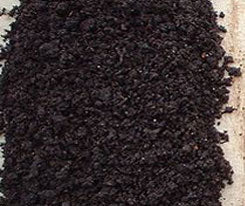
2) Garden centre compost: Looks good, free-flowing and uniform. Likely sieved.
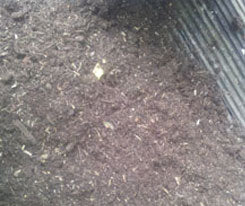
3) Traditional cold compost: Looks as expected, and mature. Perhaps two years old.
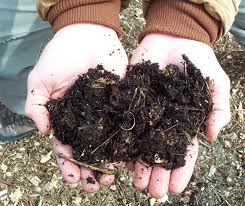
4) HOTBIN Compost at 3 months old: Looks fantastic; dark, rich, sticky and crumbly
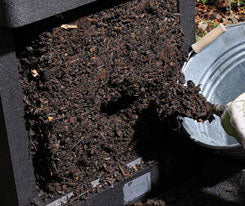
5) HOTBIN Compost that is too wet. Looks watery, clumpy, immature and soggy
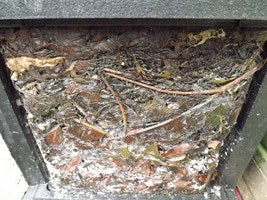
6) Anaerobic compost: Looks definitely anaerobic. This is black sludge and not compost.
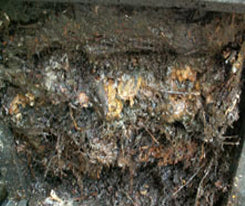
For those who want to understand the science behind the look and feel of compost, our analysis includes the following:
- Carbon/nitrogen maturity test
- Visual inspection after drying and sieving
- Pliability/colloidal behavior
- Humus test
- Result regarding quality - Is it great compost?
Read below to find out exactly what we mean by this.
Compost: carbon/nitrogen maturity test
Industrial producers of compost (i.e., those behind the compost you buy at your local garden centre) perform a check to determine how active the bacteria are. Above a certain level, the compost is too active (i.e., not mature and stable) and needs to be left longer, otherwise it may remove nitrogen from the soil while bacteria continue to use the carbon in the remaining compost. The maturity and stability test can be performed using the Solvita compost test method. You can perform this test at home, although it can be costly. Garden Centre Compost (image 2) would not have gone on sale without having passed the C/N maturity and stability test.
How does HOTBIN compost (images 4 & 5) compare to garden centre compost? Well, they both fall within the stable and mature range. This will surprise many experts as it looks clumpy, and clumpy usually means large pieces of uncomposted material, which will most likely result in an 'active' rather than stable result.
Compost sieve test: reveals fine qualities
Do you prefer finer compost particles? Then simply drying and sieving the HOTBIN compost can yield a surprisingly large amount of fine material. When the compost is dried and sieved, about 80% of the HOTBIN compost passes through a fine 8mm sieve.
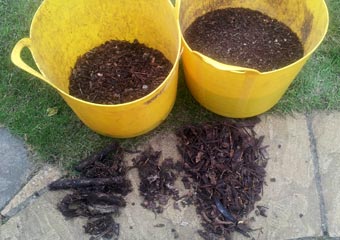
Sieved compost vs. garden compost: if you visually compare the sieved HOTBIN compost with the sieved garden centre compost, they now look very similar.
What didn't pass through the sieve consisted of about 15% wood chip pieces (8-15mm) and 5% oversized uncomposted items (especially pampas grass roots, which undoubtedly hold the record for the most difficult material to compost).
However, this sieve result is no exception. We have seen these results before.
Compost: Pliability/colloidal behavior
As we sieve and process the HOTBIN compost, we notice something else: it is very sticky. In the sieve, it already rolls into small balls, and even when you take a handful, you can form a ball with it. Just like potter's clay or play-dough, it is 'malleable'.
There are two common substances in soil and compost that create a malleable effect, namely: clay and humic compounds. Both are examples of 'colloidal' materials. This property and the way the compounds retain water together create the malleable effect.
We take the pliability test a step further. We make a ball from both moist garden centre compost and HOTBIN compost (image 5). We let these dry in the sun for four days. What happens next when squeezing each ball?
|
HOTBIN compost vs. Garden centre compost
|
HOTBIN compost and garden centre compost
|
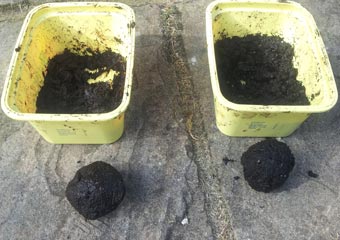
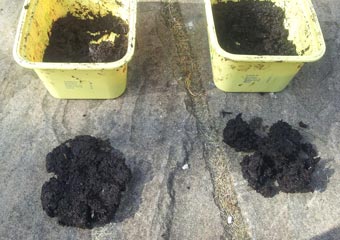
Outcome: the garden centre compost sample behaves more like peat; it sticks when wet, dries quickly (loses water 2-4 times faster), and subsequently the organic material falls apart when the dry ball is pressed.
The HOTBIN compost sample, on the other hand, is still damp and pliable. It forms a very hard, firm outer layer of material with a soft interior. Even after drying and re-moistening the compost sample, the same degree of pliability is maintained.
Compost: the role of humic substances
We believe (and yes, we mean 'believe' because we don't have laboratory proof) that it is possible that HOTBIN compost contains more humic substances than many other types of compost.
Can we test for humic substances?
The short answer is yes, but this is not easy without a fully operational soil analysis laboratory. However, there is a relatively simple humus test that focuses on measuring the concentration of humic substances in the soil.
The HOTBIN samples, however, fall off the scale - but note: this test is intended to provide a reliable field survey for soil with 0.5-6% humic substances. For concentrations far above that, this test is not reliable.
Result regarding quality - Is HOTBIN compost great compost?
We believe that the high content of humic substances in HOTBIN compost distinguishes it from ordinary compost. By adding this compost to your soil, you enrich it with components that effectively improve soil health.
Partially broken-down material (compost) will continue to decompose after it is added to the soil, and when the carbon cycle is finally completed, the material is converted into carbon dioxide, while a small amount of humus remains in the soil. Humic substances do not break down in the soil to a large extent, so adding a concentrated form will improve your soil faster.


